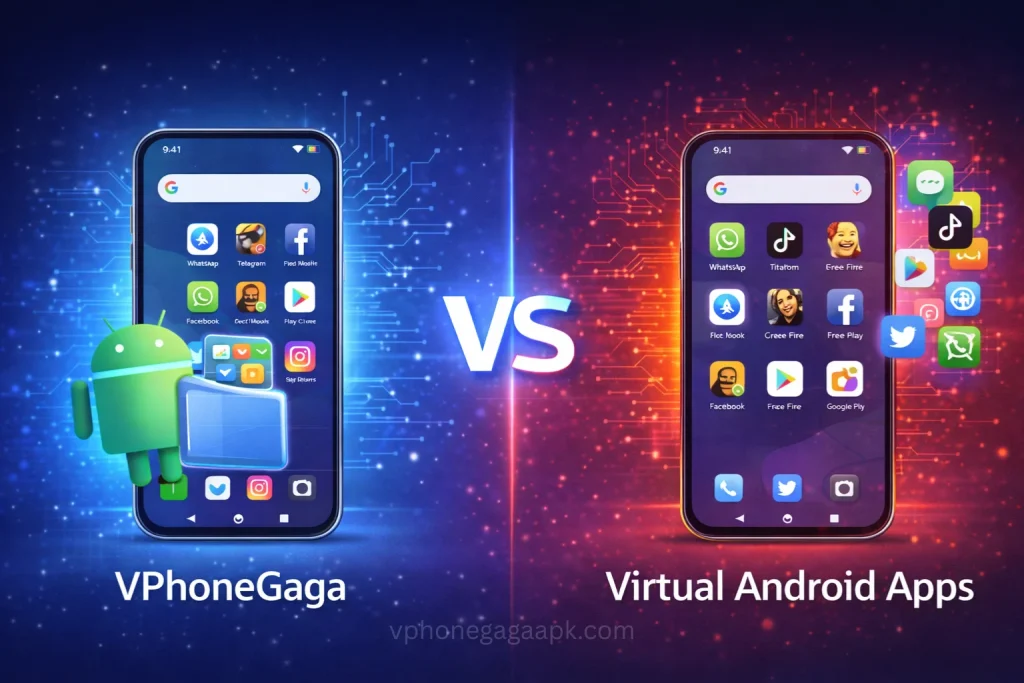
VPhoneGaga vs Virtual Android Apps – Which One is Better in 2026?
Virtual Android apps have become increasingly popular in 2026. Users want to run multiple accounts, test apps safely, or play games with dual profiles without buying a second phone. That’s where virtual Android solutions come in.
But many people ask: should you choose VPhoneGaga or another virtual Android app?
In this detailed comparison, we’ll look at performance, compatibility, security, ease of use, and real-world usage so you can decide which option fits your needs.
What is VPhoneGaga?
VPhoneGaga APK is a virtual Android environment that runs inside your device. It creates a separate space where you can install apps, clone accounts, and test APK files without affecting your main system.
It’s commonly used by:
The app works without root and supports both 32-bit and 64-bit systems, which makes it compatible with many Android devices.
What Are Virtual Android Apps?
Virtual Android apps are tools that create a simulated Android environment inside your phone. Some focus only on app cloning, while others provide a full virtual system.
These apps are generally used for:
However, not all virtual apps offer the same level of stability or performance. Some are lightweight cloners, while others function like a complete virtual machine.
Feature Comparison
Here’s a direct comparison between VPhoneGaga and typical virtual Android apps:
| Feature | VPhoneGaga | Other Virtual Apps |
| 32-bit & 64-bit Support | Yes | Limited in some apps |
| No Root Required | Yes | Mostly yes |
| Full Virtual Android System | Yes | Not always |
| Gaming Stability | Strong | Varies |
| Multi-Account Support | Yes | Yes |
| Security Isolation | Sandboxed | Depends on app |
| Android 10–12 Support | Yes | Varies |
While many apps offer cloning, fewer provide a stable full virtual system with architecture flexibility.
Performance Comparison
Gaming Performance
For users running games like PUBG or Free Fire with dual accounts, performance matters. A full virtual environment handles RAM and background processes better than basic cloning apps.
Some lightweight cloning apps may consume less space, but they often struggle with heavy games.
App Cloning Performance
For social media apps like WhatsApp or Instagram:
If your goal is only basic app cloning, many apps can handle that. If you want a complete separate Android layer, a full virtual system performs better.
Compatibility & System Requirements
Android Support
Most modern virtual Android solutions support Android 10, 11, and 12. However, compatibility may vary depending on updates and device manufacturers.
32-bit vs 64-bit Support
This is an important difference. Some virtual apps only support 64-bit devices. If you’re using an older phone with a 32-bit processor, options become limited. A solution that supports both architectures provides more flexibility across devices.
Security & Privacy Comparison
Security is a major factor when choosing a virtual Android app.
A sandbox-based system creates data separation between your main device and the virtual environment. This means:
- Apps inside the virtual space don’t directly affect your main system
- System files remain untouched
- You can test apps more safely
Most virtual apps do not require root, which helps maintain device security. However, downloading modified versions from unknown sources can increase risk regardless of the app you choose.
Ease of Use
Setup is fairly simple in most virtual Android apps:
User interface design varies. Some apps focus on minimal layout, while others provide advanced configuration options. For beginners, a clean dashboard and guided setup process make a big difference.
VPhoneGaga Pros and Cons
|
Pros
|
Cons
|
|---|---|
Other Virtual Android Apps – Pros and Cons
|
Pros
|
Cons
|
|---|---|
Who Should Choose What?
For Gamers
If you run dual game accounts or test game updates, a stable full virtual system is usually the better option.
For Developers
Testing apps in an isolated environment works best with a complete virtual Android layer rather than a basic cloner.
For Multi-Account Users
If you only need two WhatsApp or Instagram accounts, a simple cloning app may be enough.
For Low-End Devices
Lightweight cloners may perform better if your phone has limited RAM.
Conclusion
There isn’t a single winner for everyone. If you need stability, architecture flexibility, and a full virtual Android environment, VPhoneGaga stands out as a stronger choice in 2026. If your needs are basic and your device has limited resources, a lighter virtual app may be sufficient. The best option depends on how you plan to use it gaming, development, privacy, or simple account cloning.